
Every step causes pain in the knee, the shoulder locks when lifting the arm, and in the morning the fingers feel as if they're rusted. When joint pain dominates everyday life, quality of life suffers enormously. Whether it's a dull throbbing, a sharp pain during exertion, or constant stiffness – the complaints are as diverse as their triggers.
In this comprehensive guide, you will not only learn what causes joint pain but also how to actively counteract it with the right nutrition, targeted exercise, and proven home remedies. Our goal is to provide you with practical and everyday solutions so that you can soon breathe freely again and move without pain.

What are the real triggers? Tracing the causes of joint pain
To effectively treat joint pain, one must first know the enemy. The range of Joint pain causes is enormous and ranges from temporary overloads due to unusual sports to chronic conditions. The most common reasons include wear and tear, inflammation, misalignment, or injuries to ligaments and tendons.
A phenomenon that many affected individuals are familiar with is Causes of morning joint stiffness. While we sleep, our joints rest. The production of joint fluid (synovial fluid) slows down, and fluid can accumulate in the tissues. In healthy individuals, this „stiff“ feeling disappears after a few minutes of movement. However, if the stiffness persists for more than 30 to 60 minutes, it is often an initial warning sign of inflammatory processes.
A surprising aspect that many doctors and patients often consider only late: even a Vitamin B12 deficiency joint pain trigger or at least intensify. Vitamin B12 is essential for nerve function. A deficiency often leads to neurological disorders, which can manifest as tingling, numbness, or even unexplained pain in the joints and limbs.
Osteoarthritis vs. Arthritis: What's the difference?
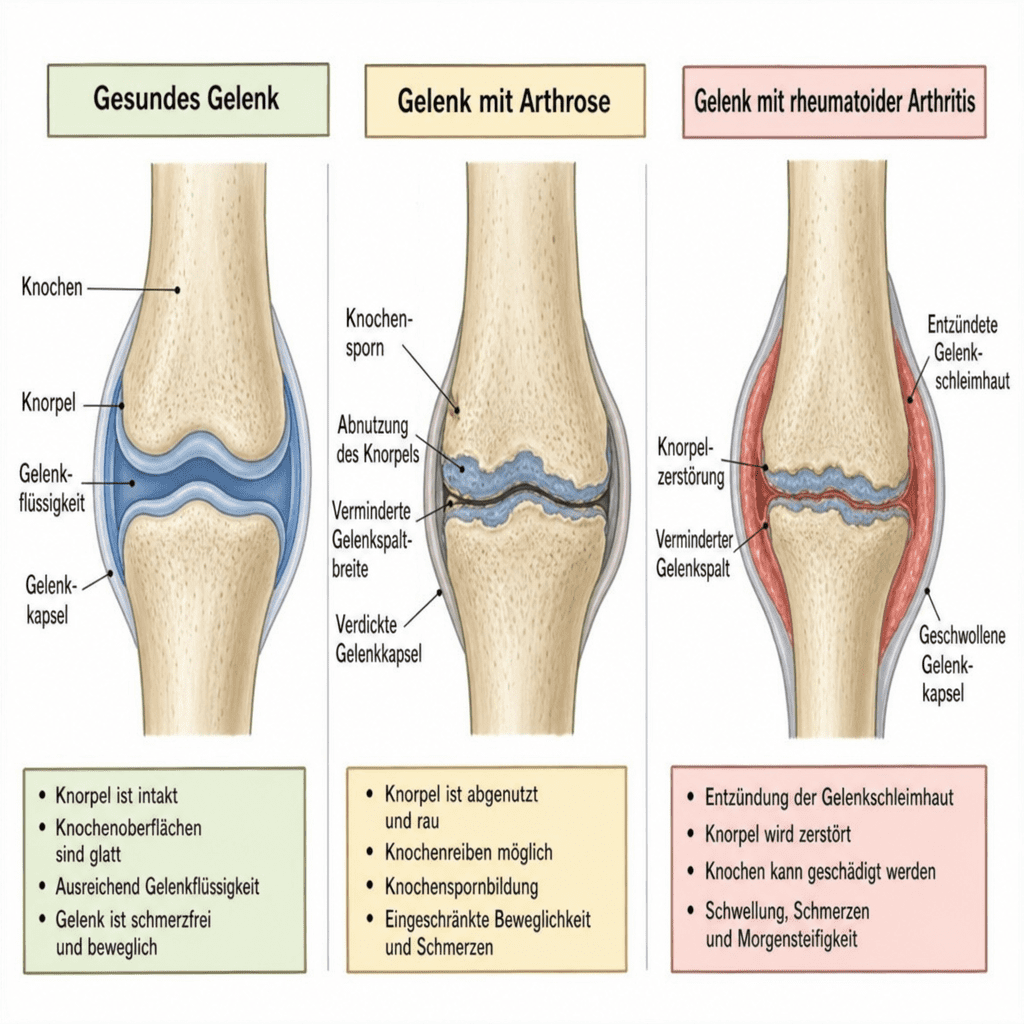
When joints hurt, the terms osteoarthritis and arthritis are often used. But although they sound similar, two completely different problems are hidden behind them. Osteoarthritis vs. Arthritis Difference To understand is essential for the correct therapy.
- Osteoarthritis (Wear and Tear) This is a degenerative joint disease. The protective cartilage layer between the bones wears away over the years or due to incorrect weight-bearing. This is referred to as classic joint wear and tear. Pain typically occurs during exertion (start-up pain).
- Arthritis (The Inflammation): The suffix „-itis“ in medicine always stands for inflammation. In arthritis, the joint is often hot, swollen, red, and painful even at rest.
Particularly important is Recognizing the symptoms of rheumatism Rheumatoid arthritis is an autoimmune disease in which the body's own immune system attacks the lining of the joints.
Your Rheumatic Diseases Checklist
If you suspect you have rheumatism, check the following points (Note: This does not replace a doctor's visit!):
- Are multiple joints affected simultaneously?
- Do the pains occur symmetrically (e.g., in both hands)?
- Do you suffer from severe morning joint stiffness (lasting over an hour)?
- Do you often feel run down, tired, and have a slight fever?
- Are the affected joints swollen and warm to the touch?
If several points apply, you should see a rheumatologist promptly.
First Aid: Acute Pain Relief Without Medication
It's not always necessary to immediately reach for a painkiller. Acute pain relief without medication is often possible through simple but highly effective measures.
One of the most common questions in practice is: Heat or cold for joint problems? The rule of thumb here is simple:
- Cold Relieves acute inflammation (arthritis, rheumatoid flare-ups, fresh injuries). Cold constricts blood vessels, dampens the inflammatory response, and numbs pain.
- Heat Helps with chronic pain without acute inflammation (osteoarthritis, muscle tension). It promotes blood circulation, relaxes tissue, and makes joints more supple.
Are you looking for a proven Home remedies for swollen knee jointsThe traditional quark wrap is a true wonder cure. Spread cool (not ice-cold) low-fat quark about a finger thick onto a cotton cloth, wrap it around the swollen knee, and leave it on until the quark is dry and warm. The lactic acid in the quark has a decongestant effect and draws the inflammatory heat out of the joint. Alternatively, compresses made with crushed white cabbage leaves are also suitable.
Nutrition as Medicine: The Anti-inflammatory Diet
Our diet has a massive impact on the health of our joints. If you Treat chronic inflammation naturally If you want that, then a change in diet is unavoidable.
A Anti-inflammatory diet for joint wear It relies on foods that suppress inflammatory messengers in the body and eliminates those that fuel inflammation.
This should be on your menu:
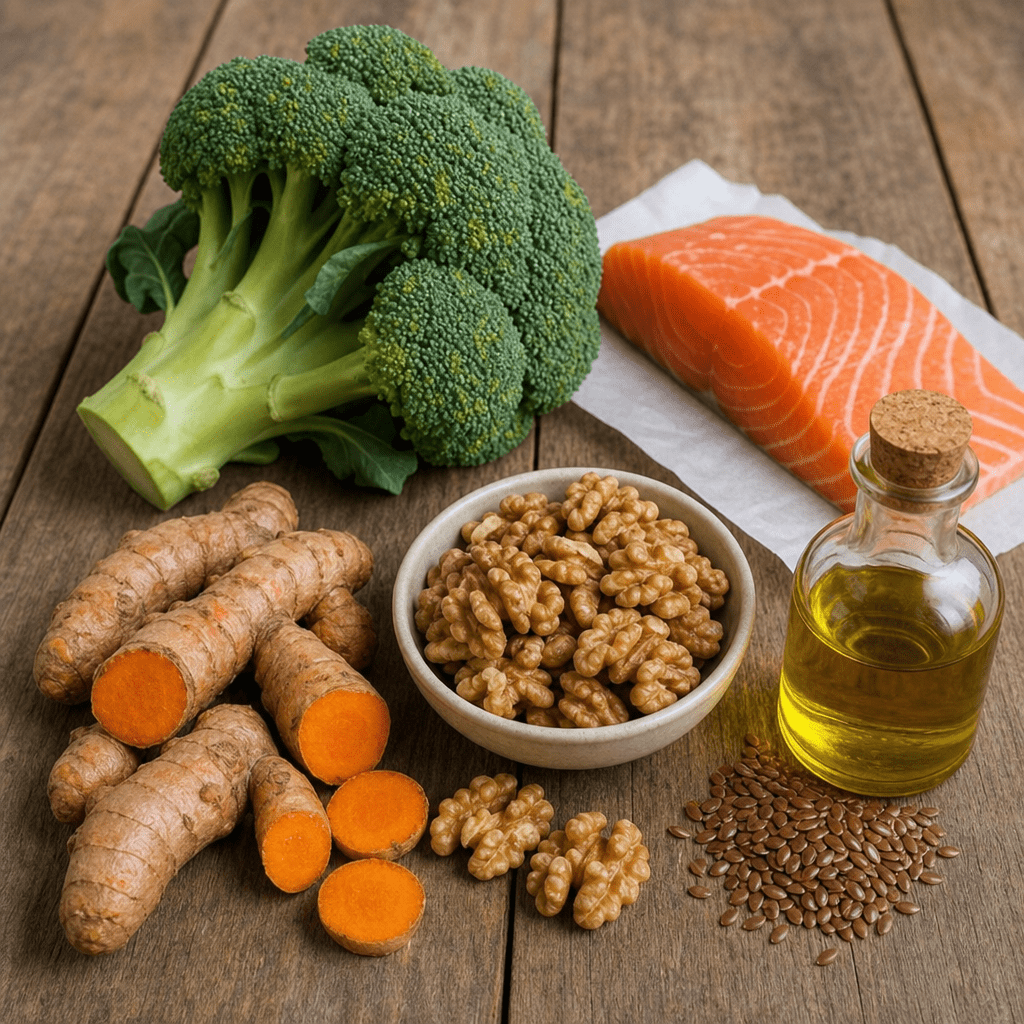
- Omega-3 Fatty Acids: Fatty sea fish (salmon, mackerel), flaxseed oil, and walnuts are excellent anti-inflammatories.
- Antioxidants Berries, spinach, broccoli, and nuts protect cells from oxidative stress.
- Spices Turmeric (in combination with black pepper) and ginger contain highly effective natural painkillers (curcumin and gingerol).
You should avoid this:
- Pork and sausages: They contain a lot of arachidonic acid, which is directly converted into inflammatory substances in the body.
- Industrial sugar and white flour: Promote inflammatory processes and contribute to obesity, which further strains the joints.
Cartilage regeneration and nutritional supplements
Many patients wonder if a Cartilage regeneration through dietary supplements is possible. Even though cartilage cannot „regrow“ in the classic sense, the remaining cartilage can be strengthened and nourished.
Especially the Glucosamine and Chondroitin Experiences Many users react positively. These two substances are natural components of cartilage tissue. Many affected individuals report that regular intake as a dietary supplement makes their joints feel „more lubricated“ again and reduces pain under strain. Collagen peptides and vitamin C (contributes to normal collagen formation) are also beneficial supplements for the musculoskeletal system.
Movement and Mobilization: If you don't use it, you lose it
Rest is often the wrong approach for joint pain. Cartilage is not supplied with blood; it nourishes itself like a sponge. Only through alternating pressure (loading and unloading during movement) does it absorb nutrients from the synovial fluid and expel waste products.
Choosing the right activity is crucial here. A Gentle exercise for strained joints is characterized by fluid movements without hard impact loads. Ideal are:
- Swimming and water aerobics (water buoyancy takes weight off the joints)
- Cycling (with a low gear and high cadence)
- Nordic Walking
- Tai Chi and Yoga (in adapted variations)
Targeted Mobilization
Especially the large joints tend to become blocked with age. Simple Hip mobilization exercises can work miracles.
- The pendulum exercise: Stand on one leg (hold onto a chair). Let the other leg swing freely back and forth. This loosens the joint capsule.
- Hip circles Stand with your feet hip-width apart and slowly and widely circle your pelvis, as if doing the hula-hoop – first in one direction, then in the other.
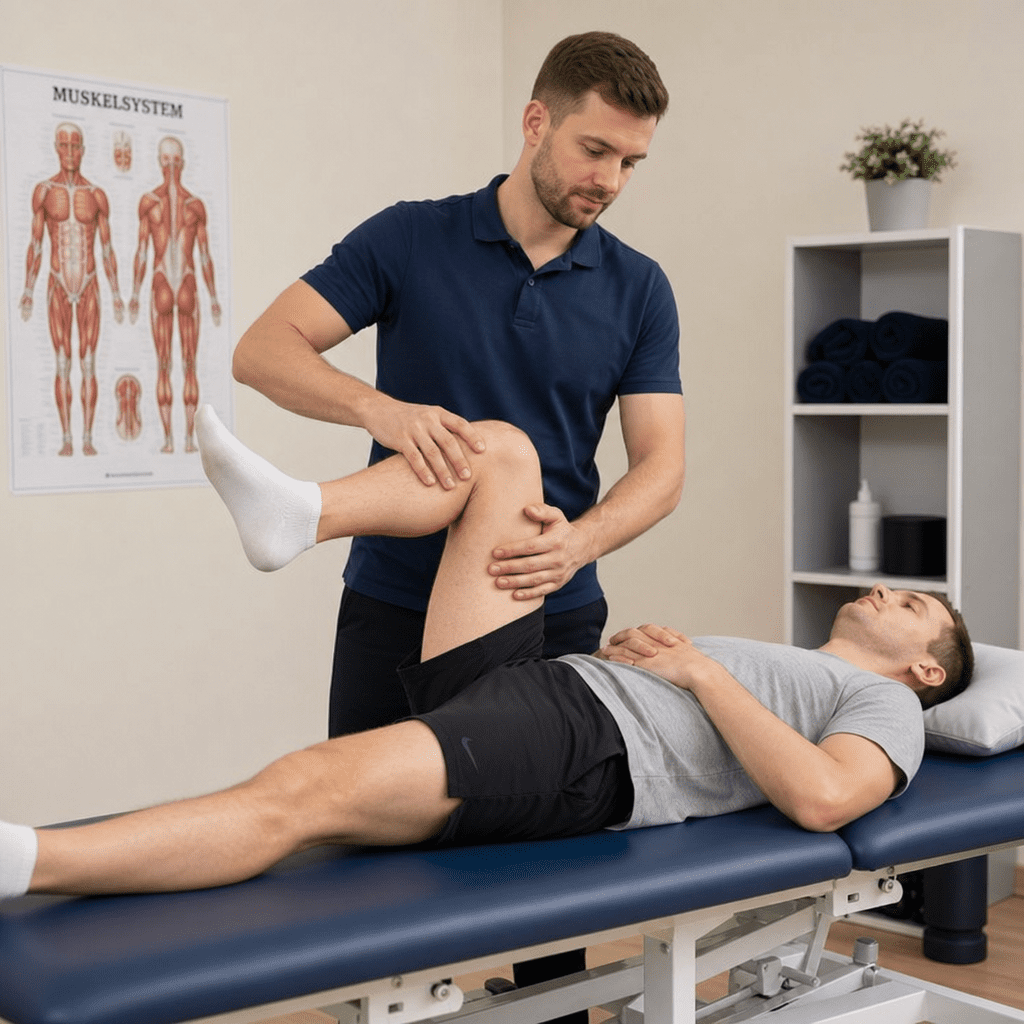
Also the Rebuilding joint function after injury requires patience. After a ligament tear or surgery, physiotherapy is initially the focus. Through gentle strength training and proprioception training (balance exercises on wobble boards), the muscles learn to optimally stabilize the joint again and avoid future joint pain.
Medical Interventions: When Home Remedies Are No Longer Enough
Despite the best nutrition and targeted exercise, there are stages of joint wear and tear where conservative methods reach their limits. However, before an artificial joint is considered, orthopedic surgeons offer minimally invasive therapies.
A frequently discussed topic here is the Hyaluronic acid injections: effects and side effects. Hyaluronic acid is the main component of natural joint fluid. In advanced osteoarthritis, this viscous substance is injected directly into the joint space.
- Effect: It acts as an artificial shock absorber and lubricant. Many patients experience significant pain relief and improved mobility, often lasting from several months up to a year.
- Side effects Since this is an intervention in the joint, swelling, redness, or a feeling of pressure may occur temporarily. In very rare cases, there is a risk of joint infection, which is why the injection should only be administered by a specialist under the highest hygiene standards.
Conclusion: Take charge of your joint health
Joint pain doesn't have to be an unavoidable fate that you must silently endure. As you've seen, the path to improvement is a combination of several factors. By having the exact causes medically clarified, distinguishing between osteoarthritis and arthritis, and adapting your lifestyle, you can positively influence the course of your condition.
An anti-inflammatory diet, replenishing nutrient stores, smart home remedies for acute flare-ups, and regular, joint-friendly exercise form the foundation for an active life. Listen to your body's signals, gradually integrate our tips into your daily routine, and give your joints the care they deserve. This way, you can effectively combat joint pain and start your day with renewed ease.
