
It often starts with a dull pressure that turns into a sharp stinging when swallowing. Ear pain as a symptom rarely an isolated problem but rather a clever warning signal from our body. ENT doctors often emphasize that the ear itself is usually just the place where we suffer, but not the true cause of the complaints.
Instead, imagine your anatomy like a house. If the „basement“ (your nose) is blocked during a cold, it immediately affects the „upper floor.“ The Eustachian tube, a narrow ventilation channel between the throat and the ear, is responsible for this connection. If this tube swells due to a cold, it creates painful negative pressure which stretches the eardrum, causing the typical pain experienced when chewing or swallowing.
Our nerve pathways also function like divided telephone lines, which doctors refer to as „referred pain.“ A tense jaw or an inflamed tooth sends distress signals that the brain mistakenly attributes to the intact ear. Someone Ear pain without a cold suggests will, therefore, must look beyond the ear and understand this close anatomical neighborhood in order to find the right relief.
Outside or Inside? Determine the location of pain with the „earlobe test“
Sudden ear pain can quickly cause concern. Many affected individuals wonder if it's caused by a deep middle ear infection or simply an irritation of the outer, visible part of the ear. A simple maneuver often provides you and your doctor with important initial clues to the exact source of the pain.
Carefully perform this two-part self-test:
- Test train Gently pull your earlobe down.
- Tragus pressure test Press lightly on the small cartilage directly in front of the ear canal.
Does the pain increase significantly with this? This suggests an outer ear infection (otitis externa). This is often colloquially called „swimmer's ear“ because water remaining in the ear after swimming is a common cause.
However, if this test remains completely painless, the problem probably lies deeper. But the hearing organ itself is not always to blame.
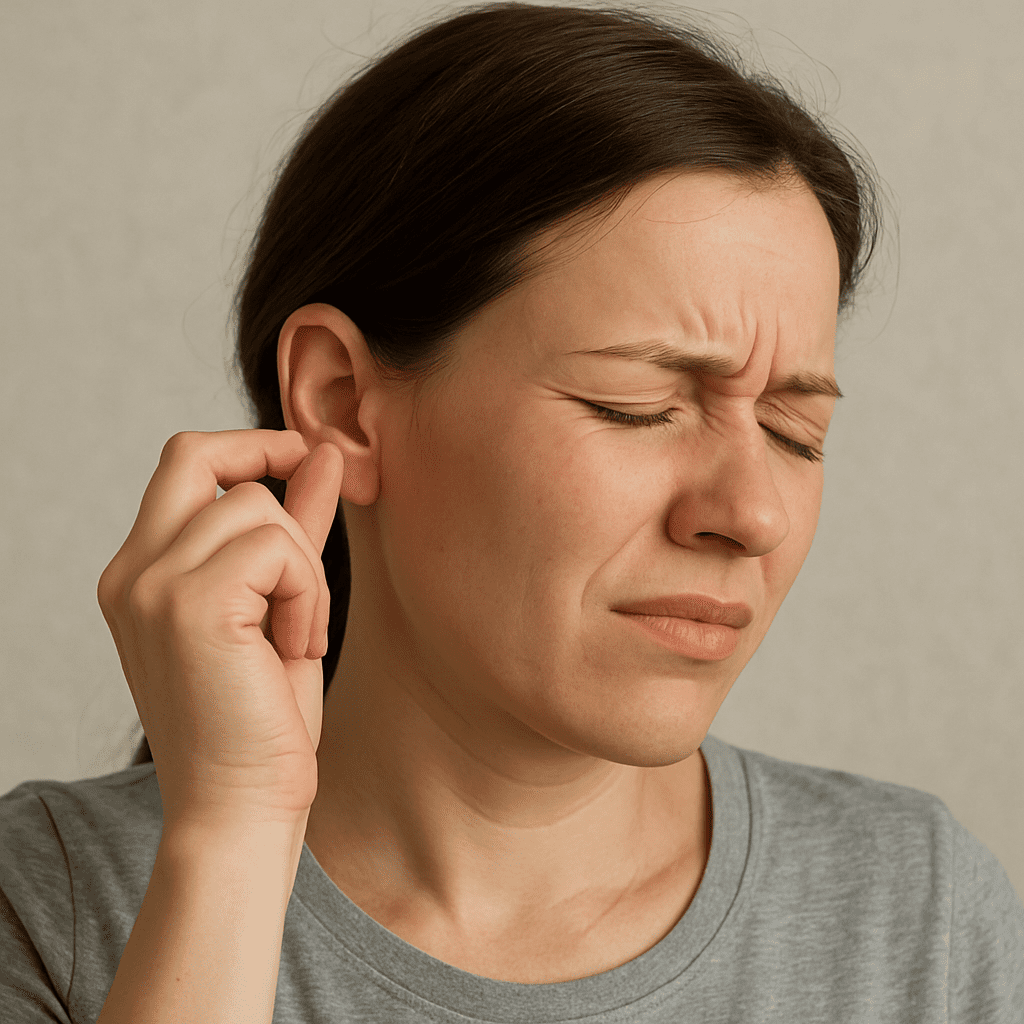
When Jaw Pain Radiates to the Ear: Why Not All Ear Pain Starts in the Ear Canal
If the earlobe test doesn’t work, your body might be playing tricks on you. Some causes of one-sided ear pain actually originate not in the ear itself, but in the adjacent oral cavity. Since nerve pathways function like shared telephone lines to the brain, the control center may mistakenly assign the signal from an inflamed tooth to the ear—a phenomenon that experts refer to as „referred pain.“.
Jaw problems, in particular, are often overlooked as a cause of earaches in everyday life. For example, people who grind their teeth at night due to stress put excessive strain on the joint located directly in front of the ear canal. Such temporomandibular joint disorders (CMD for short) can perfectly mimic a deep earache. So if you experience severe pain when chewing, a dentist is often the right person to consult for quick relief of your symptoms.
However, if the jaw can be ruled out as a trigger, the inside of the ear comes back into focus.
Middle Ear Infection vs. Ear Canal Infection: How to Tell the Symptoms Apart
Have you ever touched your ear after a visit to the swimming pool and felt a sharp pain? In such cases, it is usually an irritation in the outer area. The Difference between external otitis and otitis media The reason for this lies in the place of origin: While external inflammations are often triggered by water or cotton swabs, the problem deep inside almost always begins with a simple cold.
This direct comparison of symptoms will help you interpret your body’s signals correctly:
- Otitis externa Pain when pulling the earlobe, itching, noticeable redness, and skin overheating.
- Middle ear infection: Deep pressure pain, fever, muffled hearing. A pure A throbbing sensation in the ear without pain initially often indicates a harmless buildup of pressure.
When your nose is stuffy due to a cold, the problem often shifts. Middle ear infection symptoms and course start typically with a trapped middle ear effusion (medically SeromucotympanumThis causes fluid to build up in the ear canal, like in a clogged pipe. The painful Otitis media (Middle ear infection) only develops when bacteria multiply in this secretion.
Adults can usually clearly identify this painful focus. But what about the little ones, who are anatomically particularly susceptible to such infections?
Earaches in Babies and Children: Interpreting Signs Correctly When Words Are Missing
That Ear pain children The reason why children so often suffer from ear infections lies in their still-developing anatomy. Their Eustachian tube, which connects the throat to the ear, is significantly shorter and flatter than in adults. This allows pathogens from a stuffy nose to easily travel into the ear, where they can accumulate and quickly build up painful pressure.
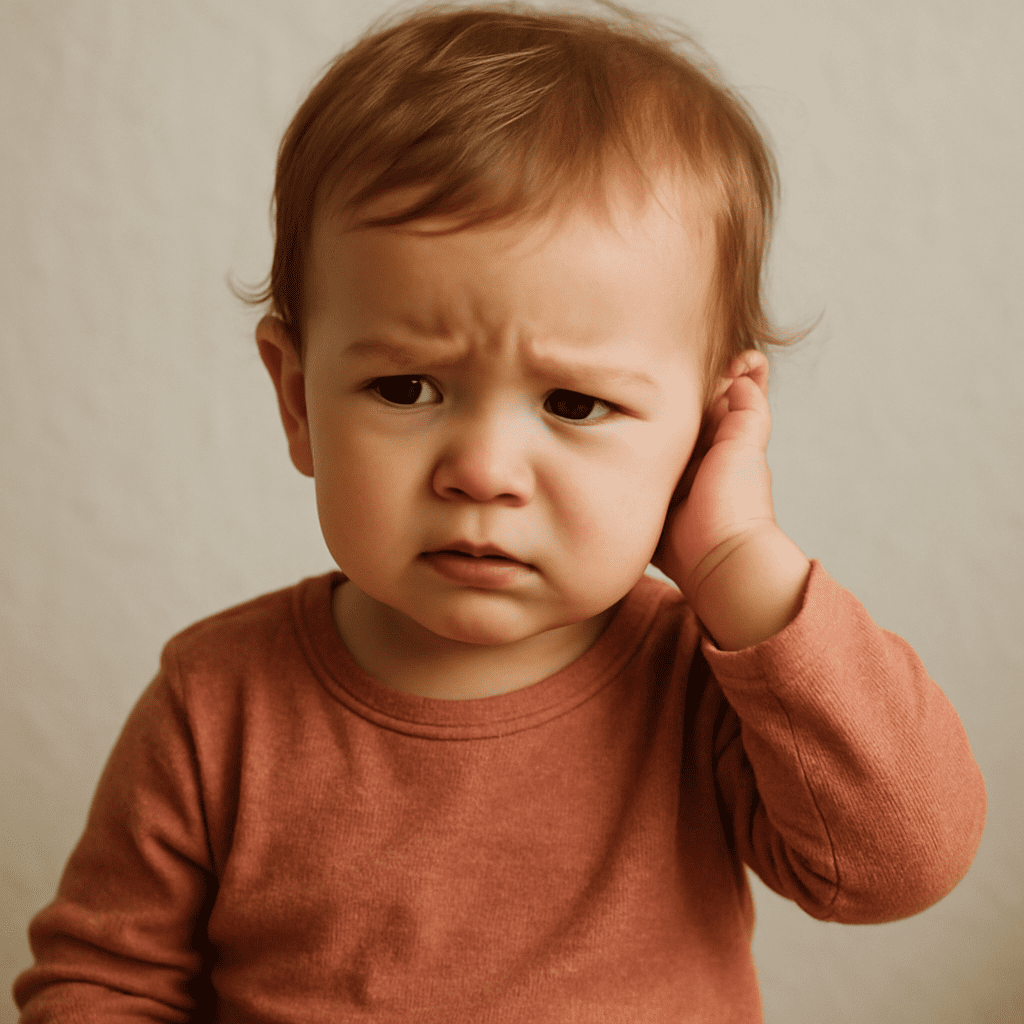
Since infants cannot communicate with words, parents must Recognizing Earaches in Babies, by paying attention to typical nonverbal warning signs:
- Frequent, restless grabbing, pinching, or rubbing at the affected ear.
- Sudden cry while lying down, as tissue pressure in the head noticeably increases when lying down.
- Refusal to drink because sucking and swallowing changes the pressure in the ear and drastically increases the pain.
For initial relief, age-appropriate pain-relieving syrups are often helpful, especially if the child has a fever or can’t sleep at all at night. However, never administer pain-relieving ear drops on your own, as a doctor must first check whether the eardrum is intact. Instead, tried-and-true home remedies applied externally often help to gently bridge the gap until the doctor’s office opens.
Grandma's Classic: How the Onion Pouch and Warmth Relieve Inflammation
When the pharmacy is closed on the weekend, tried-and-true home remedies for earache often the first rescue. Onions, in particular, are a real powerhouse here: their essential mustard oils have a naturally strong anti-inflammatory effect. These gentle vapors rise, penetrate the tissue from the outside, and help the body to relieve painful swelling.
The Onion bag application for earache is incredibly simple and is excellently suited as a gentle Home remedies for ear pain in children:
- Finely dice an onion and warm it slightly (do not cook hot).
- Wrap the warm pieces in a clean cotton cloth or sock.
- Place the packet on the aching ear for about 20 minutes and ideally secure it with a cap.
However, keep an important boundary in mind with self-treatment: If the ear is throbbing intensely or is practically glowing, additional warmth can worsen the pain – in this case, it's better to cool it. While onions often provide relief for infections, they don't help with purely mechanical triggers. Mechanical triggers, such as changing air pressure during travel, require different measures instead.
Ear pressure on airplanes: The balloon analogy for pain-free travel
During landing, a sharp pulling sensation in the ear often occurs. This so-called barotrauma happens when the increasing air pressure pushes the eardrum inward like an elastic balloon skin, and the natural passage to the throat remains blocked. A decongestant nasal spray, taken about half an hour before descent, is a true lifesaver here, opening this important ventilation passage in time.
If this preparation is missing, the Valsalva maneuver helps: Pinch your nose and gently exhale with your mouth closed to force air into your ears. Such targeted pressure equalization for ear pain on an airplane often immediately relaxes the tissue, while for babies, simply sucking on a bottle triggers the life-saving swallowing reflex.
However, sometimes the dull feeling persists after the trip because a mechanical barrier has become lodged in the ear canal. In such cases, a routine grab for a cotton swab from the bathroom cabinet is the wrong choice.
Safely Remove Earwax: Why Cotton Swabs Are Your Enemy
The urge to reach for a cotton swab might be tempting, but it usually just pushes earwax deeper into the sensitive ear canal. This sticky substance isn't dirt, but a natural protective shield against bacteria. Our body has a clever self-cleaning mechanism here: tiny cilia, known as hair cells, continuously and completely independently transport the wax outward like microscopic brooms.
If you How to remove earwax properly and safely If you want to do this without blocking this natural pathway, the following basic rules will help:
- Sure: Gently wipe the outer ear cup with a soft, damp cloth.
- Helpful If your ear feels blocked, special drops from the pharmacy can gently dissolve a stubborn blockage.
- Dangerous: Never insert chopsticks or hairpins—even the tiniest scratches can become very painful if they get infected.
Even with gentle care, a dull, pressing sensation can sometimes persist or suddenly turn into a sharp, throbbing pain. When such unexpected changes occur, simple home remedies are no longer enough, and more serious causes come into focus.
The 5 Warning Signs: When Ear Pain is an Emergency Room Case
Sometimes a slight discomfort is clearly distinct from feeling acutely ill. But when the pain suddenly becomes unbearable, swift action is required. The important question, When to see a doctor for an earache whether it needs to be addressed is best clarified by specific warning signs that indicate deeper problems.
Pay attention to these five alarm signals that absolutely require an ENT doctor or emergency services:
- Sudden discharge: Blood or discharge often indicates a perforation (a ruptured eardrum).
- Swelling A red, pressure-sensitive bone behind the auricle warns of mastoiditis (a dangerous inflammation of the bone).
- Serious accompanying symptoms such as dizziness or hearing loss.
- Facial paralysis on one side.
- High, persistent fever.
While your family doctor is the right first point of contact for common cold symptoms, these symptoms require immediate evaluation by a specialist. Once any acute medical risks have been ruled out or addressed, the focus shifts to actively relieving symptoms and managing pain.
Your Roadmap to Recovery: Pain Management and Next Steps
You now understand that earaches are rarely an isolated problem, but often serve as an alarm signal for blockages in the nose or tension in the jaw. With this knowledge, you are no longer helpless when faced with the unpleasant feeling of pressure.
For the next 24 hours, you now have a concrete action plan. Use proven preparations like ibuprofen strategically as a bridge to get through the acute phase and find essential sleep. However, keep in mind that medication, painkillers, or ear drops for relief will only temporarily mask your body's warning signs while you get to the root of the problem.
You’ll also be well-prepared to prevent it in the future. The next time you go to the pool, you’ll know exactly how to dry your ears properly and thus prevent and treat painful swimmer’s ear. You now have the tools you need to react immediately, calmly, and effectively at the very first signs.
